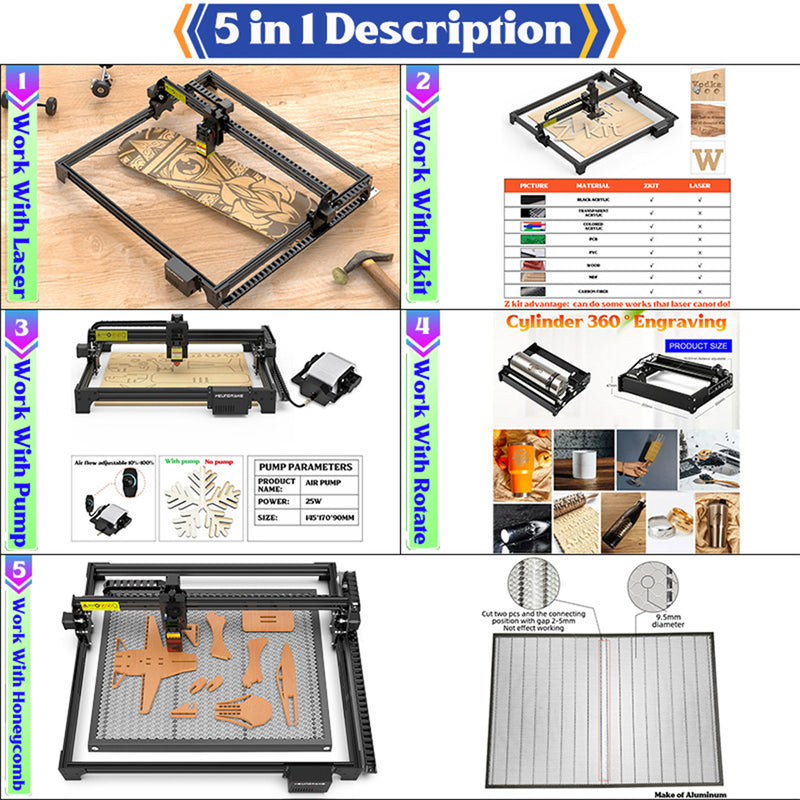
Laser Cutter for Wood and Metal: How to Choose the Right Machine
A laser cutter can create precise cuts, engraved details, and repeatable designs with minimal physical contact. But choosing one machine for both wood and metal takes careful planning: different laser technologies work best with different materials, and a machine that cuts wood well may not be equipped to cut metal.
How laser cutting works
A laser cutter focuses a concentrated beam of light onto a material. The beam heats a small area until the material melts, vaporizes, or burns away. A motion system guides the beam along a digital design, while software controls the path and settings.
Cut quality depends on several factors, including laser type and power, material composition and thickness, cutting speed, focus, and assist gas. Settings that work for one material may not work for another, so testing and following the machine manufacturer’s guidance are essential.
Cutting wood with a laser
Wood is commonly cut with a CO2 laser. These machines can cut and engrave many woods and wood-based materials, such as plywood, MDF, veneer, and solid wood. They’re popular for signs, models, decorative panels, gifts, and custom parts.
Results vary by species, thickness, moisture, resin content, and adhesive. Plywood, for example, may contain glues that affect cutting or produce unwanted fumes. Some woods can char more readily than others. Good ventilation, suitable extraction, and material testing help produce cleaner, more consistent results.
Cutting and marking metal
For cutting metal, industrial fiber laser systems are widely used. They can process materials such as stainless steel, carbon steel, aluminum, brass, and copper, with performance depending on the machine’s power, configuration, and the metal’s type and thickness.
Not every laser marketed for metal can cut it. Many desktop diode or CO2 machines can mark coated or treated metals, or engrave certain metals with the right setup, but they generally are not substitutes for a fiber laser metal-cutting system. A metal’s reflective properties can also make processing more challenging and may create safety concerns if the machine is not designed for that material.
Can one laser cutter handle both wood and metal?
Some systems can work with both materials, but the range of tasks may be limited. A machine designed for wood cutting might only mark metal, while a metal-cutting fiber laser may not be the best choice for detailed wood engraving. Before buying, define what “work with metal” means for your project: cutting through sheet metal, engraving, or marking a surface are different requirements.
If you need to cut both wood and metal regularly, compare the capabilities of dedicated machines with those of a combination system. Consider not only the advertised laser power, but also the supported materials, maximum thickness, work area, software, extraction requirements, and operating costs.
What to consider before choosing a machine
- Materials and thickness: List the exact materials and maximum thicknesses you expect to process.
- Laser type: CO2 lasers are commonly used for wood; fiber lasers are commonly used for metal cutting and marking. Diode lasers are suited to a narrower range of applications.
- Work area: Choose a bed large enough for your typical parts, with room for material handling.
- Cut quality: Ask about edge finish, kerf width, repeatability, and performance on your specific materials.
- Software and workflow: Check file compatibility, design tools, job setup, and ease of operation.
- Ventilation and utilities: Cutting can produce smoke, fumes, and particulates. Confirm the required extraction, cooling, power, and assist-gas setup.
- Support and maintenance: Review training, service availability, replacement parts, and routine maintenance needs.
Safety matters
Laser cutters require appropriate safeguards. Use a machine with suitable guarding and interlocks, and follow its operating instructions. Provide effective fume extraction, keep the work area clear of flammable materials, and never leave a cutting job unattended. Materials should be confirmed as laser-safe before processing; some plastics and composites can release hazardous fumes. Metal-cutting systems may also require specialized enclosures, gases, and operating procedures.
Choose for the work you actually do
The best laser cutter for wood and metal depends on the tasks, materials, and production volume involved. CO2 systems are a common choice for wood cutting and engraving, while fiber systems are typically used for metal cutting and marking. Matching the machine to your intended work—and verifying its capabilities with the manufacturer—helps you get reliable results while operating safely.
5 Essential Tips for Safe and Effective Laser Cutting of Wood and Metal
- Use a CO₂ laser for wood; cutting bare metal usually requires a fiber laser.
- Never laser-cut PVC or unknown materials; toxic fumes may result.
- Ventilate well and keep a fire extinguisher nearby.
- Focus the beam and test settings on scrap material first.
- Stay with the cutter while it runs, and clean up debris between cuts.
Use a CO₂ laser for wood; cutting bare metal usually requires a fiber laser.
For most wood-cutting projects, a CO₂ laser is a practical choice because it can cut and engrave many types of wood and wood-based materials. Bare metal is different: cutting it usually requires a fiber laser designed for metal processing, since many standard CO₂ and diode machines can only mark or engrave certain metals rather than cut through them. Before choosing a machine, confirm that it supports your specific material and thickness, and always follow the manufacturer’s safety and operating guidelines.
Never laser-cut PVC or unknown materials; toxic fumes may result.
Never laser-cut PVC or materials you can’t positively identify. When heated, PVC can release toxic, corrosive fumes that may harm people and damage the laser cutter. If you’re unsure what a material contains, don’t cut it—check its safety information or choose a known, laser-safe alternative.
Ventilate well and keep a fire extinguisher nearby.
Good ventilation is essential when using a laser cutter for wood or metal, because cutting can release smoke, fumes, and fine particles. Use an appropriate exhaust system and follow the machine manufacturer’s safety instructions; never rely on an open window alone. Keep a suitable fire extinguisher nearby, know how to use it, and stay with the machine while it is operating, since laser-cut materials can ignite.
Focus the beam and test settings on scrap material first.
Before cutting your final piece, focus the laser beam carefully and test your settings on scrap material similar to the wood or metal you plan to use. Proper focus helps create cleaner, more consistent cuts, while a test run lets you adjust power and speed to reduce charring, incomplete cuts, or unwanted marks.
Stay with the cutter while it runs, and clean up debris between cuts.
Stay with the laser cutter whenever it’s running—never leave an active job unattended. Wood can ignite, and scraps or residue near the cutting area can catch fire or interfere with the machine. Between cuts, pause the job safely and clear away debris as directed by the manufacturer. For metal work, remove leftover pieces only when it’s safe to do so, since they may remain hot. Keeping the work area clean and monitored helps reduce fire risks and supports consistent cutting.
No Responses