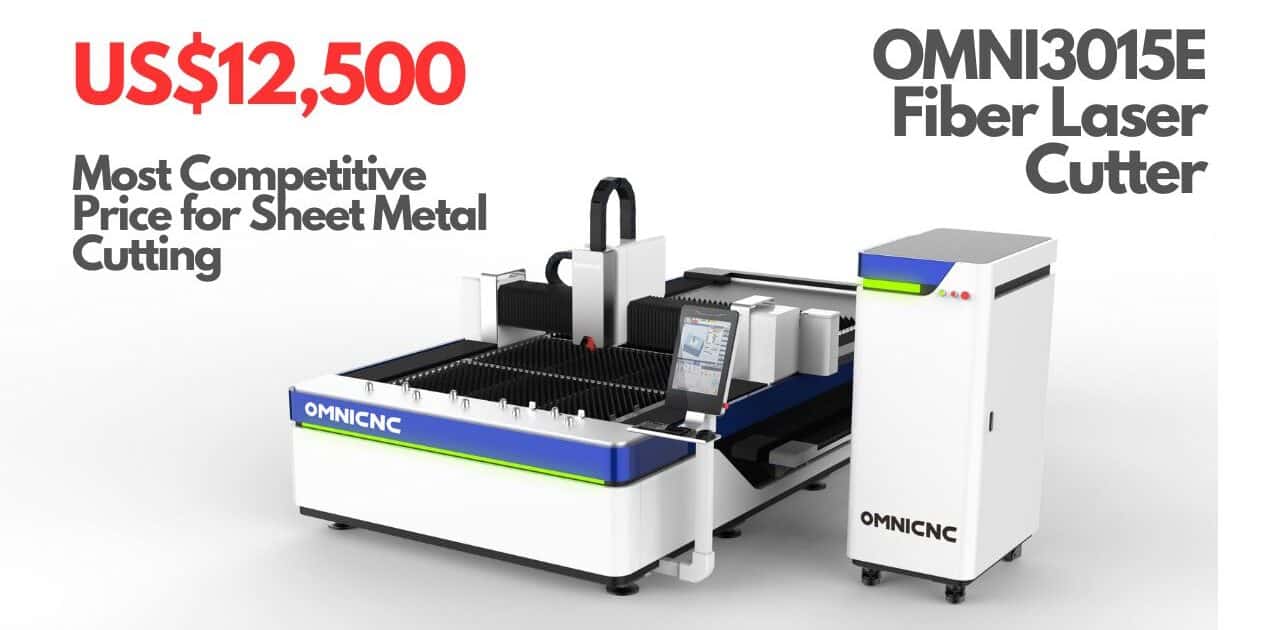
Fiber Laser Cutting Machine Price: What to Expect
The price of a fiber laser cutting machine can range from tens of thousands of dollars to well over a million. The final cost depends on factors such as laser power, cutting-table size, automation, brand, and the materials and thicknesses you need to process.
When comparing machines, look beyond the advertised price. Installation, training, software, shipping, maintenance, and optional equipment can significantly affect the total investment. The estimates below are general U.S. market ranges, not vendor quotes; actual prices vary by configuration and supplier.
Typical Fiber Laser Cutting Machine Price Ranges
- Entry-level or compact machines: Approximately $20,000 to $80,0
These may suit light-duty work, smaller parts, or businesses with modest production needs.
- 1–3 kW industrial machines: Approximately $50,000 to $180,0
These systems are often considered by shops cutting sheet metal at low to moderate production volumes.
- 4–6 kW machines: Approximately $100,000 to $350,0
Higher power can support faster cutting and a broader range of material thicknesses, depending on the machine and process setup.
- 8–12 kW machines: Approximately $200,000 to $600,000 or more. These are typically aimed at higher-throughput operations and demanding production schedules.
- High-power or automated production systems: $500,000 to over $1 million. Large-format machines, advanced automation, and integrated production lines can push costs substantially higher.
These ranges can overlap because two machines with the same laser power may differ considerably in construction, motion systems, cutting head, software, safety features, and included support.
What Affects the Price?
Laser power
Laser power is one of the most visible price factors. Higher-power systems can cut some materials and thicknesses more quickly, but the improvement depends on material type, part geometry, assist gas, and the machine’s overall design. Choose power based on your actual production requirements rather than assuming that more power is always the best value.
Working area and machine construction
A larger cutting bed can handle bigger sheets and may reduce the need to reposition material. Larger machines generally require more floor space and can cost more to ship, install, and operate. The frame, gantry, motion components, and thermal stability also affect performance and price.
Automation and material handling
Options such as automatic loading and unloading, pallet changers, storage towers, and sorting systems can raise the initial investment. For a busy shop, automation may reduce handling time and keep production moving. For lower volumes, a simpler setup may be more economical.
Software and controls
Machine-control software, nesting tools, remote monitoring, and integration with existing production systems may be included or priced separately. Confirm which licenses, updates, and training are part of the purchase.
Brand, service, and warranty
Purchase price is only one part of the value equation. Local technical support, parts availability, warranty coverage, and technician response times can matter greatly when a machine is down. Compare what each supplier provides after delivery.
Additional Costs to Include in Your Budget
A machine’s purchase price may not include every item needed to put it into production. Ask suppliers to specify costs for:
- Shipping, rigging, and installation
- Operator and maintenance training
- Electrical upgrades and facility preparation
- Chillers, dust collection, and fume extraction
- Assist gases, regulators, and gas-delivery equipment
- Protective equipment and safety systems
- Software, licenses, and network integration
- Replacement windows, nozzles, filters, and other consumables
- Preventive maintenance and service agreements
Operating costs also matter. Electricity use, assist gas, consumables, maintenance, and labor all contribute to the cost per part. The amounts depend on your machine, materials, cutting settings, workload, and local utility rates.
New vs. Used Fiber Laser Cutting Machines
A used machine may offer a lower upfront price, but its condition and service history are essential. Before buying, review maintenance records, inspect the cutting head and motion system, confirm the laser source’s status, and check that replacement parts and technical support are available. Ask whether installation, software access, and operator training are included.
A new machine generally costs more but may provide a full warranty, current controls, and clearer support arrangements. Compare the total cost of ownership—not only the purchase price—when evaluating new and used options.
How to Choose the Right Machine for Your Budget
- List your production needs. Identify the materials, thicknesses, sheet sizes, daily volume, and accuracy requirements you expect.
- Request a sample cut. Provide representative parts and materials, then assess cut quality, speed, edge condition, and repeatability.
- Compare complete quotes. Make sure each quote includes the same scope, options, installation, training, warranty, and service terms.
- Evaluate support. Ask where service technicians are located, how quickly parts can be supplied, and what remote support is available.
- Estimate total ownership costs. Consider operating expenses, maintenance, expected uptime, and possible productivity gains.
Conclusion
Fiber laser cutting machine prices vary widely, from around $20,000 for some compact or entry-level systems to more than $1 million for high-power, automated production lines. The right choice depends on the work you need to perform and the machine’s complete cost of ownership. Comparing detailed quotes and testing real production parts can help you find a system that fits both your requirements and your budget.
7 Reasons Why Fiber Laser Cutting Machines Offer Cost-Effective Solutions for Every Budget
- Wide range of machine prices to fit different budgets.
- Entry-level models offer an accessible starting point.
- Higher power can increase cutting speed and capacity.
- Automation can reduce material-handling costs.
- Used machines may lower upfront investment.
- Comparing quotes helps reveal the best overall value.
- Efficient production can improve long-term cost per part.
7 Cost Considerations When Investing in a Fiber Laser Cutting Machine
- High upfront purchase cost
- Installation can add significant expense
- Automation options raise the total price
- Maintenance and replacement parts add ongoing costs
- Assist gases and electricity increase operating expenses
- Low-cost models may have limited support
- Used machines can require costly repairs
Wide range of machine prices to fit different budgets.
Fiber laser cutting machines are available at a wide range of prices, making it easier for businesses to find an option that fits their budget and production needs. Compact, entry-level models can provide an accessible starting point for smaller shops, while more powerful machines with larger work areas and automation are available for high-volume operations. This range lets buyers invest in the capabilities they need now and consider upgrading as their business grows.
Entry-level models offer an accessible starting point.
Entry-level fiber laser cutting machines offer an accessible starting point for small businesses, workshops, and manufacturers exploring laser cutting for the first time. With a lower upfront cost than high-power or fully automated systems, these models can help buyers take on suitable cutting jobs without making a larger initial investment. Choosing an entry-level machine can also provide a practical way to build experience and assess production needs before upgrading.
Higher power can increase cutting speed and capacity.
Higher-power fiber laser cutting machines can cut faster and handle thicker materials, increasing production capacity and helping businesses complete more work in less time. Although these machines typically cost more upfront, the added speed and capability may improve productivity and make the investment worthwhile for shops with demanding workloads.
Automation can reduce material-handling costs.
Automation can help reduce material-handling costs by limiting the manual labor needed to load, unload, and sort materials. Features such as automatic loaders, pallet changers, and part-sorting systems can keep production moving with less operator intervention, freeing staff for other tasks and improving throughput. Although automation increases the machine’s upfront price, it may deliver long-term savings for businesses with steady production volumes.
Used machines may lower upfront investment.
Used fiber laser cutting machines can lower the upfront investment, making laser cutting more accessible to businesses with limited budgets or those adding capacity gradually. A pre-owned machine may offer the capabilities you need at a lower purchase price, but compare its condition, maintenance history, remaining service life, and parts availability before buying. Be sure to factor in installation, repairs, and ongoing support to understand the machine’s total cost.
Comparing quotes helps reveal the best overall value.
Comparing quotes from multiple suppliers helps you see what you’re really getting for the price. Look beyond the machine’s upfront cost and compare included features, installation, training, warranty coverage, service response, and ongoing expenses. A lower quote may leave out essential support or equipment, while a higher one may offer better reliability and long-term value. Reviewing complete, itemized quotes makes it easier to choose a fiber laser cutting machine that fits your budget and production needs.
Efficient production can improve long-term cost per part.
An efficient fiber laser cutting machine can help lower your long-term cost per part by processing jobs faster, reducing material waste, and minimizing manual handling. Although a higher-throughput machine may require a larger upfront investment, its productivity can help spread that cost across more parts over time. The actual savings depend on factors such as production volume, machine utilization, material costs, and operating expenses.
High upfront purchase cost
One major drawback of fiber laser cutting machines is their high upfront purchase cost. Even entry-level models can require a substantial investment, while higher-power machines with automation and larger work areas may cost hundreds of thousands of dollars or more. Businesses also need to budget for installation, training, facility upgrades, and accessories, which can increase the initial expense. For small shops or companies with limited production needs, these costs may make it difficult to justify the purchase.
Installation can add significant expense
Installation can add significant expense to the price of a fiber laser cutting machine. Beyond delivery, setup may require specialized rigging, electrical upgrades, facility preparation, and professional calibration. Training operators and integrating the machine with existing software or production systems can add further costs. Ask suppliers for an itemized quote that clearly states what installation includes so you can budget for the full investment.
Automation options raise the total price
Automation options can significantly increase the total price of a fiber laser cutting machine. Features such as automatic loading and unloading, pallet changers, material storage towers, and part-sorting systems can improve productivity, but they also add to the upfront investment, installation costs, and maintenance needs. Before choosing these upgrades, consider your production volume and labor requirements to determine whether the efficiency gains justify the added expense.
Maintenance and replacement parts add ongoing costs
Maintenance and replacement parts add to the ongoing cost of owning a fiber laser cutting machine. Consumables such as protective windows, nozzles, filters, and other components need periodic replacement, while routine servicing helps keep the machine accurate and reliable. Costs can increase if specialized parts are difficult to source or require qualified technicians to install. When comparing machines, include expected maintenance, parts availability, and service costs in your budget—not just the initial purchase price.
Assist gases and electricity increase operating expenses
Assist gases and electricity can add significantly to the operating cost of a fiber laser cutting machine. Depending on the material and cutting settings, the machine may use compressed air, nitrogen, or oxygen, while its laser source, chiller, and extraction system also consume power. These recurring expenses can raise the cost per part, especially during long production runs, so they should be included when comparing machine prices and estimating return on investment.
Low-cost models may have limited support
One drawback of choosing a low-cost fiber laser cutting machine is that support may be limited. The purchase price might not include thorough operator training, quick access to qualified technicians, or readily available replacement parts. If a machine needs troubleshooting or repairs, delays can lead to downtime and lost production. Before buying, check the warranty, service response times, parts availability, and what technical support is included.
Used machines can require costly repairs
One potential drawback of buying a used fiber laser cutting machine is the risk of costly repairs. Components such as the laser source, cutting head, chiller, and motion system can wear over time, and replacing or servicing them may require specialized technicians and expensive parts. Before purchasing, review the machine’s maintenance history, inspect its condition, and confirm that replacement parts and technical support are available.
No Responses