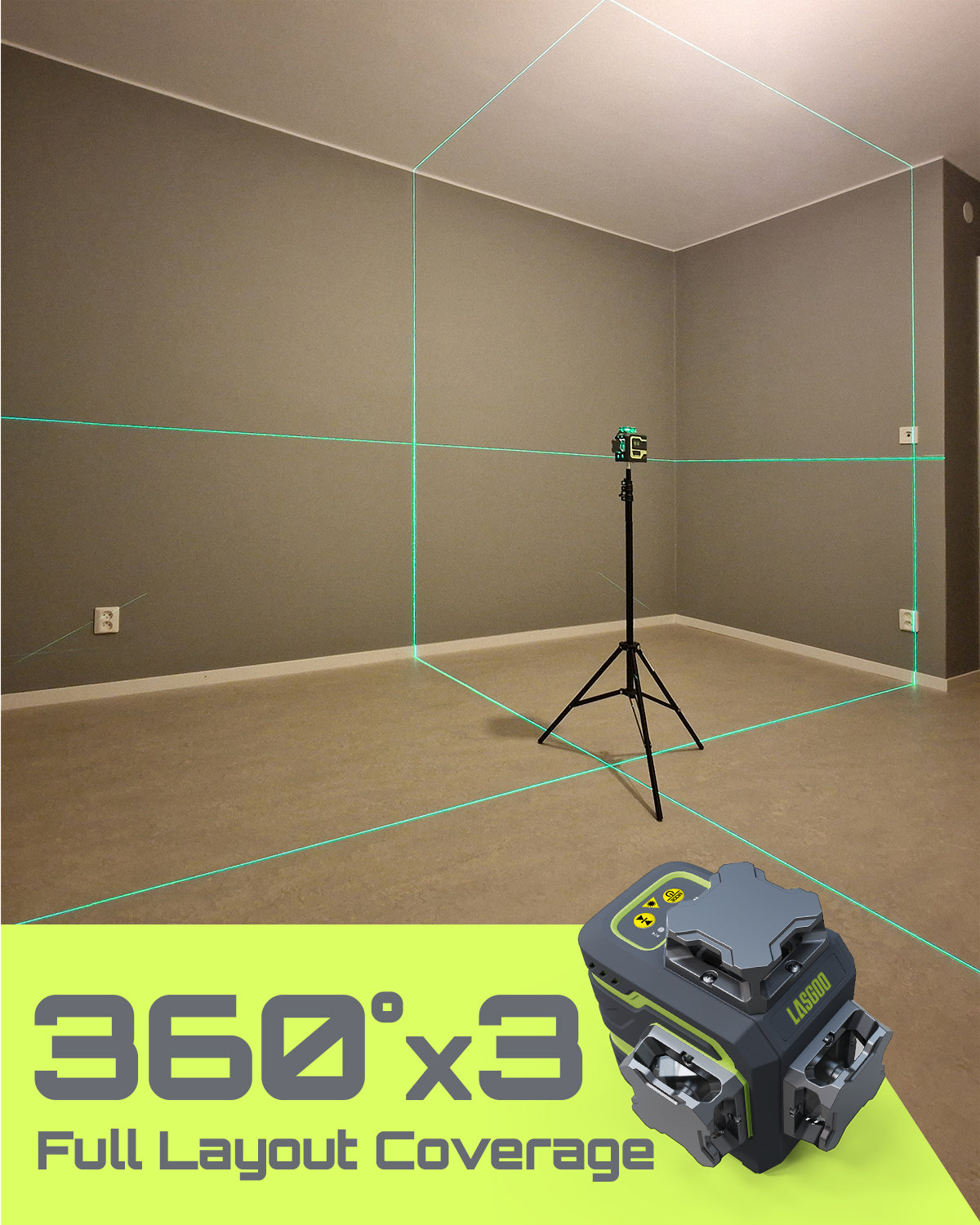
The Power of 3D Laser Technology
3D laser technology has revolutionized various industries, offering unparalleled precision and efficiency in a wide range of applications. By harnessing the power of lasers in three-dimensional space, businesses and researchers have unlocked new possibilities that were once thought impossible.
One of the key advantages of 3D laser technology is its ability to capture detailed spatial information with incredible accuracy. This technology is widely used in fields such as architecture, engineering, and manufacturing to create precise digital models of physical objects or environments.
For example, in the field of architecture, 3D laser scanning allows professionals to quickly and accurately capture existing structures and landscapes, enabling them to create detailed building plans and designs with ease. This level of precision not only saves time but also reduces the margin for error, resulting in more efficient and cost-effective projects.
In manufacturing, 3D laser technology plays a crucial role in quality control and product development. By using lasers to scan and measure intricate details of manufactured components, companies can ensure that their products meet strict specifications and standards. This level of precision is essential for industries such as aerospace, automotive, and electronics where even minor deviations can have significant consequences.
Beyond industrial applications, 3D laser technology is also transforming fields such as healthcare, art conservation, and entertainment. In medicine, for instance, 3D laser scanning is used to create detailed models of patients’ anatomy for surgical planning or prosthetic design. In art conservation, lasers are employed to analyze and restore delicate artifacts with utmost care and precision.
As the capabilities of 3D laser technology continue to evolve, we can expect even more groundbreaking advancements in various sectors. From improving efficiency in production processes to enhancing medical diagnostics and treatment methods, the potential applications of 3D laser technology are limitless.
Embrace the power of 3D laser technology today and unlock a world of possibilities!
5 Essential Tips for Accurate and Efficient 3D Laser Scanning
- Ensure the surface being scanned is clean and free of debris for accurate 3D laser scanning results.
- Calibrate the 3D laser scanner regularly to maintain its accuracy and precision.
- Adjust the scan resolution based on the level of detail required for your project to optimize scanning efficiency.
- Use targets or reference points when conducting multiple scans to ensure proper alignment and registration of data.
- Consider ambient lighting conditions when performing 3D laser scanning as bright light can interfere with accurate measurements.
Ensure the surface being scanned is clean and free of debris for accurate 3D laser scanning results.
To achieve precise and reliable 3D laser scanning results, it is essential to ensure that the surface being scanned is clean and free of debris. Any dirt, dust, or obstructions on the surface can interfere with the laser’s accuracy, leading to distorted or incomplete scan data. By maintaining a clean environment and preparing the surface properly before scanning, you can optimize the quality of your 3D scans and obtain accurate measurements for your projects.
Calibrate the 3D laser scanner regularly to maintain its accuracy and precision.
Regular calibration of the 3D laser scanner is essential to uphold its accuracy and precision. By ensuring that the scanner is properly calibrated on a consistent basis, users can maintain the integrity of their measurements and data, thus enhancing the reliability of the scanning results. Calibration serves as a critical maintenance practice that helps optimize the performance of the 3D laser scanner, enabling it to deliver consistent and high-quality output for a variety of applications across different industries.
Adjust the scan resolution based on the level of detail required for your project to optimize scanning efficiency.
When utilizing 3D laser technology, it is essential to adjust the scan resolution according to the level of detail needed for your project. By customizing the scan resolution based on specific requirements, you can optimize scanning efficiency and ensure that you capture the necessary level of detail without compromising speed or accuracy. This strategic approach allows you to tailor the scanning process to meet the unique demands of your project, maximizing productivity and achieving precise results.
Use targets or reference points when conducting multiple scans to ensure proper alignment and registration of data.
When utilizing 3D laser technology for conducting multiple scans, it is essential to incorporate targets or reference points into the process. These markers serve as crucial guides to ensure accurate alignment and registration of data across different scans. By strategically placing targets in the scanning area, operators can streamline the merging of scan data, resulting in a comprehensive and cohesive 3D model. This meticulous approach not only enhances the precision of the final output but also facilitates seamless integration of individual scan datasets, thereby optimizing the overall efficiency and reliability of the scanning process.
Consider ambient lighting conditions when performing 3D laser scanning as bright light can interfere with accurate measurements.
When engaging in 3D laser scanning, it is crucial to take into account the ambient lighting conditions to ensure accurate measurements. Bright light sources can introduce interference that may affect the precision of the scanning process. By carefully considering and controlling the lighting environment, users can optimize the quality of their 3D scans and minimize potential inaccuracies caused by external light sources.
No Responses