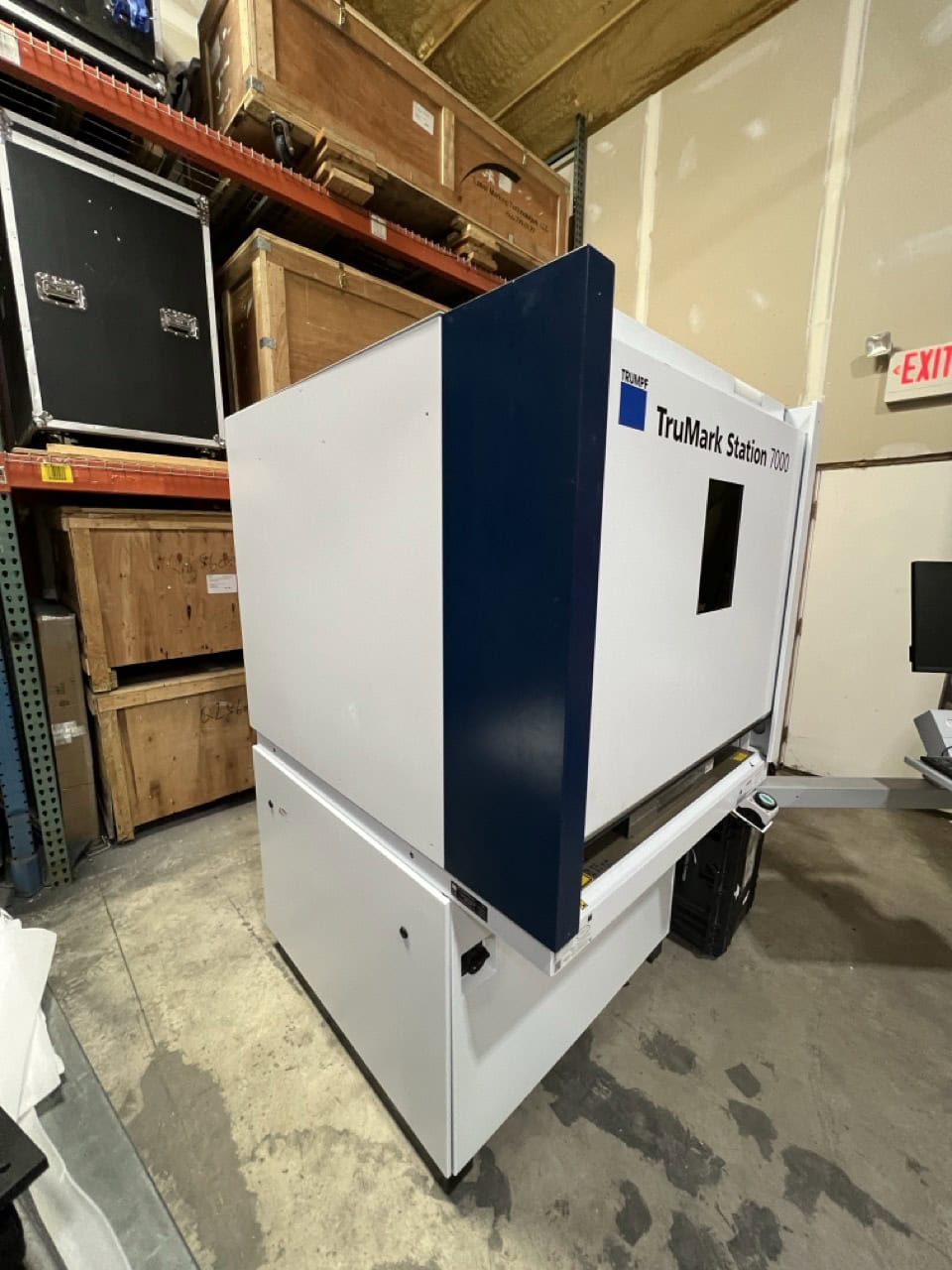
TRUMPF Laser Marking: Precision, Permanence, and Production Flexibility
Laser marking is widely used to add identification and information to products without applying ink, labels, or other consumables. TRUMPF develops industrial laser marking systems designed for applications such as serial numbers, logos, barcodes, QR codes, and traceability data. These systems can be integrated into automated production lines or configured for individual workstations, depending on the application.
What Is Laser Marking?
Laser marking uses a focused beam of light to alter a material’s surface or appearance. The result may be a change in color, a textured surface, or a shallow engraved mark. The exact effect depends on the material, laser source, and processing settings.
Common marking techniques include:
- Annealing: Heat changes the color of certain metals while leaving the surface largely intact.
- Engraving: The laser removes material to create a recessed, durable mark.
- Foaming: The laser creates a raised, often lighter-colored mark on some plastics.
- Color change: The laser modifies a material’s appearance without necessarily removing material.
TRUMPF Marking Systems
TRUMPF’s TruMark product family includes laser marking solutions for industrial use. Depending on the system and configuration, manufacturers can select options suited to different materials, mark sizes, cycle times, and production environments. Laser type, beam delivery, software, work area, and integration requirements all influence which setup is appropriate.
Laser marking can be used on materials such as metals, plastics, and selected ceramics. However, results vary by material composition, coating, surface finish, and process settings. Testing representative samples is an important step before committing to a production setup.
Common Applications
Manufacturers use laser marking to support product identification and traceability across a range of industries. Typical applications include:
- Serial numbers, part numbers, and manufacturing dates
- Barcodes and QR codes for tracking and data access
- Logos, labels, and decorative graphics
- Identification on tools, components, and equipment
- Marks designed to remain legible through handling or later processing
Because the mark is created directly on the part, laser marking can reduce reliance on applied labels and marking consumables. It can also support repeatable, automated workflows when the system is properly configured and maintained.
Benefits of Laser Marking
Laser marking offers several potential advantages for production environments:
- Durability: Many laser marks resist wear better than surface-applied labels, though durability depends on the marking method and operating conditions.
- Precision: A focused beam can create detailed marks on small or complex parts.
- Repeatability: Digital job files and controlled process parameters help produce consistent results.
- Automation potential: Marking equipment can be integrated with handling systems, inspection tools, and production software.
- Reduced consumables: The process typically does not require ink or adhesive labels.
Choosing the Right System
Selecting a laser marking system begins with the part and the mark—not just the laser. Consider the material, required contrast, mark dimensions, data content, production volume, and available cycle time. It is also important to determine whether the part will be marked before or after coating, heat treatment, or other finishing steps.
For high-volume production, integration factors such as part handling, automation interfaces, software, and in-line verification may be just as important as the laser itself. A sample-marking evaluation can help confirm readability, appearance, processing time, and resistance to the conditions the part will encounter.
Safety and Integration
Industrial laser equipment must be installed and operated according to applicable safety standards and the manufacturer’s instructions. The required safeguards depend on the laser class and the complete system design. Enclosures, interlocks, extraction, protective equipment, and operator training may be necessary. A qualified integrator or laser-safety professional can help assess the installation and its operating environment.
Conclusion
TRUMPF laser marking systems are designed to help manufacturers create precise marks for identification, branding, and traceability. The best solution depends on the material, desired mark, production requirements, and integration needs. Evaluating actual parts and process conditions is the practical way to determine whether a particular system is a good fit.
TRUMPF Laser Marking FAQs: Quality, Costs, Manufacturing, and Buying Tips
- Which laser marking machine is best?
- Is TRUMPF a German company?
- Where are TRUMPF lasers made?
- Is it worth buying a laser engraving machine?
- What is the cost of TRUMPF laser marking machine?
- What should you not laser engrave?
- Are Trumpf lasers good?
- How much does a laser marking system cost?
Which laser marking machine is best?
The best TRUMPF laser marking machine depends on your material, marking method, part size, required cycle time, and production setup. Start by defining the mark you need—such as a serial number, QR code, logo, or deep engraving—and consider whether the system must fit into an automated line or serve a standalone workstation. Because materials and finishes can produce different results, testing sample parts is a practical way to compare mark quality and processing speed before choosing a system.
Is TRUMPF a German company?
Yes. TRUMPF is a German company headquartered in Ditzingen, near Stuttgart. Founded in 1923, it is a family-owned industrial technology manufacturer known for machine tools, laser systems, and laser marking solutions used around the world.
Where are TRUMPF lasers made?
TRUMPF is headquartered in Ditzingen, Germany, and many of its laser systems are developed and manufactured there. However, the exact manufacturing location can vary by product and model, as TRUMPF operates production sites in several countries. For a specific laser marking system, check its nameplate or product documentation, or contact TRUMPF with the model and serial number.
Is it worth buying a laser engraving machine?
Buying a laser engraving machine can be worthwhile if you regularly mark or personalize products, need durable identification, or want more control over production speed and consistency. A TRUMPF laser marking system may suit businesses with demanding industrial requirements, but the investment should be weighed against equipment, installation, safety, maintenance, and training costs. Consider the materials you’ll mark, expected production volume, required mark quality, and whether outsourcing would be more economical. Testing sample parts and comparing the total cost of ownership with your current process can help you decide.
What is the cost of TRUMPF laser marking machine?
The cost of a TRUMPF laser marking machine varies based on the laser type, power, work area, software, automation, and installation requirements. Because configurations are tailored to specific materials and production needs, there may not be one standard price. For an accurate quote, contact TRUMPF or an authorized distributor with details about the parts you need to mark, your expected production volume, and any integration requirements.
What should you not laser engrave?
Avoid laser engraving materials that can release toxic, corrosive, or flammable fumes, or that may ignite, melt unpredictably, or damage the laser system. Common examples include PVC and other chlorine-containing plastics, vinyl, unknown plastics, and materials with hazardous coatings or treatments. Never engrave a material unless its composition is known and the laser manufacturer confirms it is suitable for your system. Check the material’s safety data, use appropriate ventilation and fume extraction, and follow the equipment manufacturer’s safety guidance; when in doubt, do not process it until a qualified professional has assessed it.
Are Trumpf lasers good?
Yes, TRUMPF lasers are generally regarded as high-quality industrial systems, known for precision, reliability, and options for integrating into production lines. Whether one is right for your application depends on factors such as the material, marking requirements, production volume, budget, and available support. Compare specific models and test samples of your parts to confirm marking quality, speed, and overall fit.
How much does a laser marking system cost?
The cost of a TRUMPF laser marking system depends on factors such as the laser type, work area, required marking speed, software, automation, safety equipment, and installation needs. Because configurations vary by application, there isn’t one price that fits every setup. For an accurate estimate, define your materials, mark requirements, production volume, and integration needs, then request a quote from TRUMPF or an authorized representative. Consider the total cost of ownership too, including training, maintenance, and any required production-line modifications.
No Responses