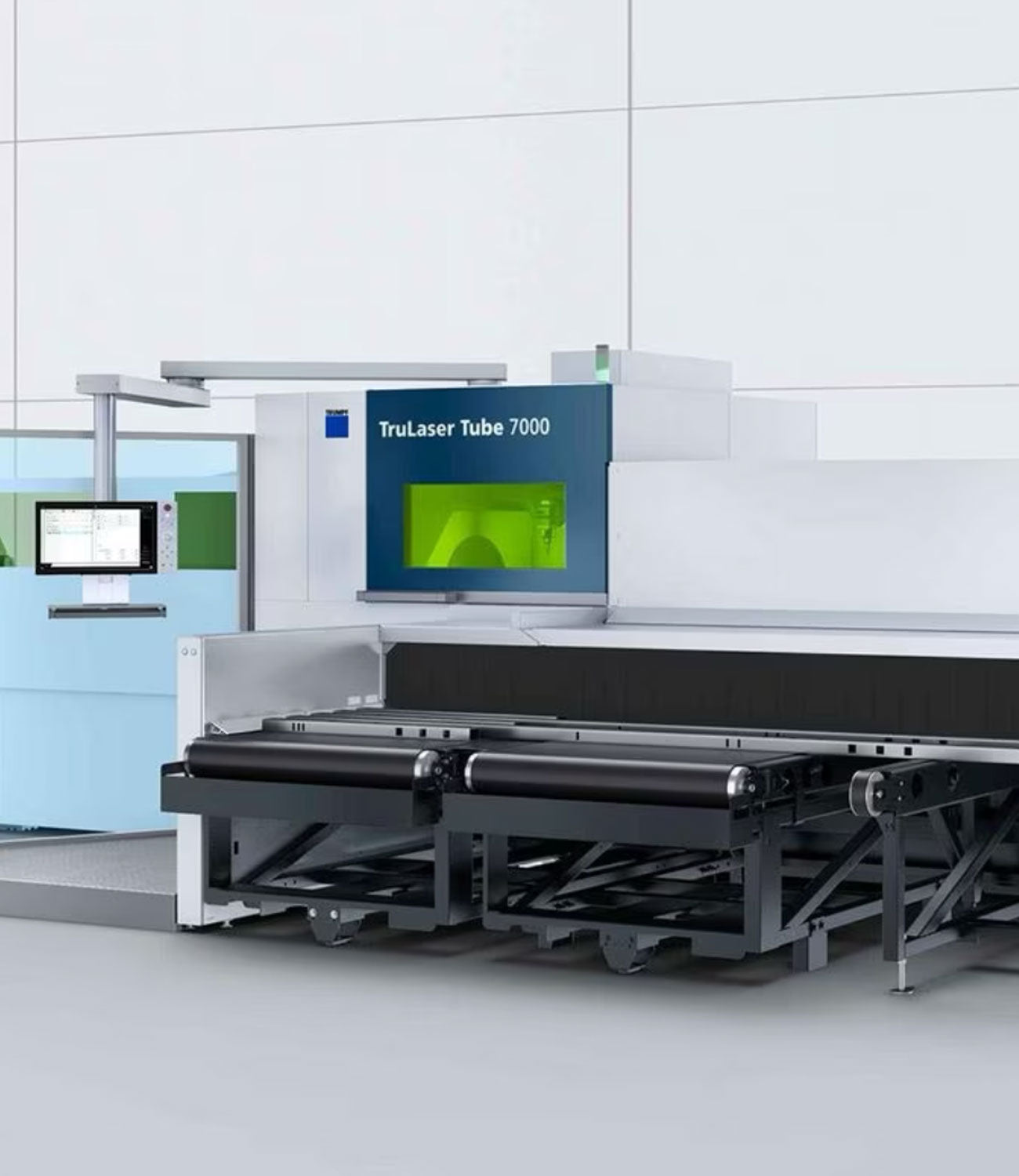
TRUMPF TruLaser Tube 7000: A Guide to High-Performance Tube Laser Cutting
The TRUMPF TruLaser Tube 7000 is an industrial laser-cutting system designed to process tubes and other profiles with speed and precision. By combining laser cutting with automated material handling, it can help manufacturers produce accurate parts while reducing manual work and simplifying downstream operations.
What Is the TruLaser Tube 7000?
The TruLaser Tube 7000 belongs to TRUMPF’s range of tube-processing machines. It is designed for businesses that need to cut a variety of profile shapes and create features such as holes, slots, contours, and end cuts directly in the workpiece. Depending on the machine generation and configuration, the system may use different laser sources, cutting technologies, and automation options.
As with any industrial machine, the exact capabilities depend on the model year, installed equipment, and material-handling setup. Buyers should confirm the specifications for the particular machine they are considering with TRUMPF or an authorized representative.
Key Capabilities
- Flexible profile processing: Designed to cut tube and profile materials in shapes such as round, square, and rectangular, subject to the machine’s specifications.
- Precise laser cutting: Laser processing can produce detailed geometries and clean edges, helping reduce the need for some secondary machining.
- Integrated operations: Cutting features into a tube in one setup can reduce handling and support more efficient production workflows.
- Automation options: Loading, unloading, and other material-handling features may be available to support higher-volume production and reduce operator intervention.
- Production flexibility: CNC programming allows jobs to be adjusted for different part designs and production requirements.
Potential Benefits for Manufacturers
Tube laser cutting can replace several conventional operations, such as sawing, drilling, and some milling tasks, with a single programmed process. For manufacturers, this may mean fewer setups, shorter lead times, and more consistent part quality. It can also make complex tube designs easier to produce, including components with intersecting cuts or carefully positioned openings.
Automation can be especially valuable for companies running repeat jobs or multiple shifts. When configured appropriately, an automated system can keep material moving through the machine with less manual handling. The practical gains will depend on part mix, batch size, material supply, programming, and how well the machine is integrated into the broader production line.
Industries and Applications
Tube laser systems such as the TruLaser Tube 7000 may be used in industries that manufacture frames, structural components, and tubular assemblies. Typical applications can include furniture, automotive components, agricultural equipment, construction products, fitness equipment, and general metal fabrication. The machine’s suitability for a specific application depends on the material, profile dimensions, wall thickness, tolerances, and required production volume.
What to Consider Before Buying
Before purchasing a new or used TruLaser Tube 7000, evaluate the requirements of your production operation rather than relying on a general product description. Important questions include:
- What are the maximum and minimum profile dimensions supported by the specific machine?
- Which materials and wall thicknesses will be processed?
- What laser source and cutting head are installed?
- What loading and unloading systems are included?
- Does the machine support the required part tolerances and cutting features?
- What are the installation, ventilation, power, and floor-space requirements?
- Are software, training, service, and spare parts available for the machine’s age and configuration?
For a used machine, it is also important to review service records, operating hours, maintenance history, software status, and the condition of major components. A thorough inspection and a sample-part test can help verify that the system is appropriate for the intended work.
Conclusion
The TRUMPF TruLaser Tube 7000 is a tube laser-cutting platform intended for manufacturers seeking precise profile processing and opportunities to automate production. Its value depends on matching the machine’s configuration to the materials, part designs, and output requirements of the shop. Confirming the specifications of the exact model—and assessing the complete production workflow—will help determine whether it is the right solution for a particular operation.
Top 5 FAQs About the TRUMPF TruLaser Tube 7000: Capabilities, Specifications, Costs, and More
- What materials and tube profiles can the TRUMPF TruLaser Tube 7000 cut?
- What are the maximum tube dimensions and wall thickness the TruLaser Tube 7000 can process?
- What laser power and cutting technology does the TRUMPF TruLaser Tube 7000 use?
- How much does a new or used TRUMPF TruLaser Tube 7000 cost?
- What automation, software, and maintenance options are available for the TruLaser Tube 7000?
What materials and tube profiles can the TRUMPF TruLaser Tube 7000 cut?
The TRUMPF TruLaser Tube 7000 can be configured to cut common metal tube materials, including carbon steel, stainless steel, and aluminum. It is designed for profiles such as round, square, and rectangular tubes, with the machine’s specific capabilities depending on its model, laser configuration, material thickness, and profile dimensions. Check the specifications for the exact machine to confirm that it can handle your materials and tube sizes.
What are the maximum tube dimensions and wall thickness the TruLaser Tube 7000 can process?
The TRUMPF TruLaser Tube 7000 can process tubes and profiles up to approximately 254 mm (10 in.) in diameter; the maximum wall thickness depends on the material, laser power, and machine configuration. Typical published limits are around 8 mm for mild steel, 6 mm for stainless steel, and 4 mm for aluminum, but specifications can vary by model and setup. Check the technical data for the specific machine to confirm its exact capacity.
What laser power and cutting technology does the TRUMPF TruLaser Tube 7000 use?
The TRUMPF TruLaser Tube 7000’s laser power and cutting technology depend on its model year and configuration. The TruLaser Tube 7000 fiber version uses a solid-state fiber laser, with 3 kW available on some configurations, to cut tubes and profiles using CNC-controlled laser processing. Because power options and features can vary between versions, check the machine’s nameplate or technical documentation to confirm the specifications of a particular unit.
How much does a new or used TRUMPF TruLaser Tube 7000 cost?
The cost of a new or used TRUMPF TruLaser Tube 7000 varies widely, so there is no single price that applies to every machine. A new system is typically quoted based on its configuration, laser source, automation options, software, and installation requirements. Used-machine prices depend on factors such as model year, operating hours, condition, included equipment, maintenance history, and whether delivery or service is included. For an accurate estimate, request a current quote from TRUMPF or an authorized dealer, and have any used machine inspected before purchase.
What automation, software, and maintenance options are available for the TruLaser Tube 7000?
Automation options for the TruLaser Tube 7000 vary by model year and configuration, but may include automatic tube loading and unloading, material handling, and finished-part removal or sorting. TRUMPF programming software, such as TruTops Tube on compatible systems, can support tube-part design, programming, and production preparation; available software and machine-monitoring features depend on the installation. Maintenance typically includes regular inspection and cleaning, replacement of consumable parts, and scheduled servicing, with TRUMPF support or service agreements available depending on location and machine eligibility. Check the specific machine’s configuration and documentation to confirm which options are installed or supported.
No Responses