5-Axis Laser Cutting Machines: How They Work and Where They’re Used
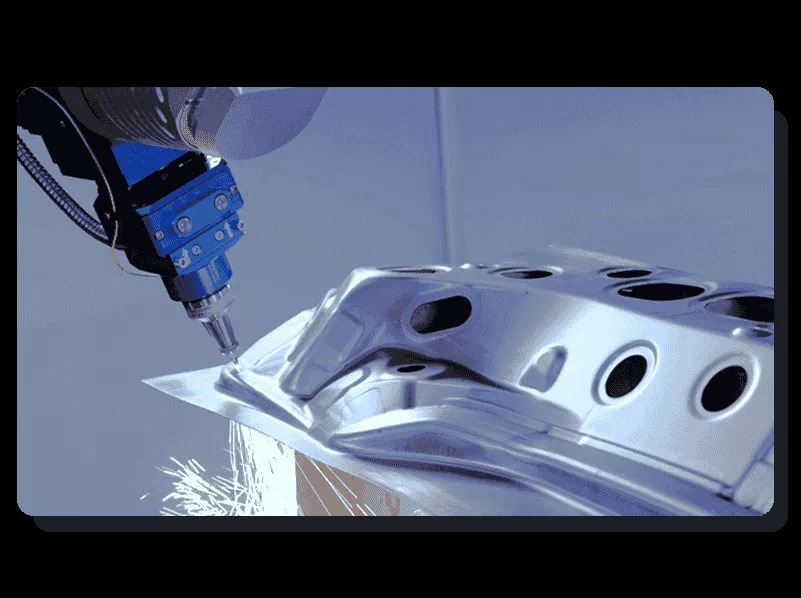
A 5-axis laser cutting machine can cut complex shapes from multiple angles, making it useful for parts that are difficult or impossible to produce with a conventional flatbed laser cutter. By coordinating the laser with the workpiece across five axes of movement, the machine can create angled cuts, contours, and three-dimensional features with precision.
What Is a 5-Axis Laser Cutting Machine?
A typical laser cutter moves along three linear axes: X, Y, and Z. These control movement across the work area and the distance between the cutting head and the material. A 5-axis machine adds two rotational axes, often called A and B, though axis names and machine designs can vary.
The added rotation allows the cutting head, the workpiece, or both to tilt and turn during the cutting process. This gives the laser access to angled surfaces and curved features without requiring the part to be repositioned manually between operations.
How Does 5-Axis Laser Cutting Work?
Before cutting begins, a CAD model or other digital design is translated into machine instructions. The control system coordinates the linear and rotational movements so the laser follows the intended path while maintaining the required position relative to the material.
Depending on the machine, the workpiece may be held on a rotary or tilting table, or the cutting head may move in multiple directions around a stationary part. Sensors and software can help manage positioning and cutting parameters, but setup still depends on the material, part geometry, and machine configuration.
Key Advantages
- Access to complex geometries: The additional rotational movement makes it possible to cut angled surfaces, bevels, and features on three-dimensional parts.
- Fewer setups: Multiple cutting angles may be completed in one machine cycle, reducing the need to remove and reposition a part.
- Greater design flexibility: Engineers can create intricate components that would require several processes on simpler equipment.
- Potentially improved consistency: Automated movement can help produce repeatable results when the machine is properly programmed and calibrated.
- Efficient material processing: For suitable parts, combining operations in one setup can reduce handling and production time.
Common Applications
5-axis laser cutting is used when parts have complex shapes, angled surfaces, or features that are difficult to reach with a two-dimensional cutting setup. Applications may include:
- Automotive and aerospace components
- Metal tubes, pipes, and structural profiles
- Precision parts for industrial equipment
- Three-dimensional panels and formed components
- Prototypes and custom-fabricated parts
The specific materials a machine can process depend on its laser source, power, optics, motion system, and operating parameters. Metals are common, but some systems are configured for other materials. Always confirm material compatibility with the machine manufacturer.
What to Consider When Choosing a Machine
Not every 5-axis laser cutter is designed for the same work. Before selecting a system, consider the dimensions and weight of the parts, the required cutting angles, material types and thicknesses, production volume, and the level of precision required. It is also important to evaluate the machine’s working envelope, control software, tooling and fixturing options, maintenance needs, and available technical support.
Programming and operator training matter, too. Five-axis motion adds flexibility, but it also makes toolpaths and collision avoidance more complex. A capable software workflow and well-trained operators help ensure that the machine can be used safely and effectively.
Safety and Maintenance
Laser cutting requires appropriate safeguards. Operators should follow the manufacturer’s instructions and applicable workplace regulations, use required enclosures and interlocks, and ensure that ventilation or fume extraction is suitable for the materials being processed. Protective equipment should be selected for the specific laser system and task.
Routine maintenance typically includes inspecting optics, cleaning or replacing filters as directed, checking alignment and calibration, and keeping motion components in good condition. Regular maintenance can help preserve cut quality and reduce unexpected downtime.
Is a 5-Axis Laser Cutter Right for Your Operation?
A 5-axis laser cutting machine can be a strong fit for manufacturers that frequently process complex parts or need to cut multiple faces and angles in a single setup. For simpler, flat components, a standard 2D laser cutter may be more practical and economical. Comparing your part designs, production requirements, and total operating costs can help determine which configuration makes the most sense.
By combining laser precision with multi-directional movement, 5-axis systems expand the range of shapes that can be produced in a single operation. The right machine, software, and process setup can help manufacturers handle demanding geometries with greater flexibility and control.
Everything You Need to Know About 5-Axis Laser Cutting Machines: FAQs and Insights
- What is a 5-axis laser cutting machine, and how does it work?
- What materials can a 5-axis laser cutting machine cut?
- What are the advantages of 5-axis laser cutting over 2D or 3-axis cutting?
- Which industries commonly use 5-axis laser cutting machines?
- How much does a 5-axis laser cutting machine cost?
- How do I choose the right 5-axis laser cutting machine for my application?
What is a 5-axis laser cutting machine, and how does it work?
A 5-axis laser cutting machine uses three linear movements (X, Y, and Z) and two rotary movements to cut parts from multiple angles. Its computer-controlled system coordinates the laser head and workpiece so the beam can follow complex paths across angled or curved surfaces. This allows the machine to create three-dimensional features and bevels, often without repositioning the part between cuts.
What materials can a 5-axis laser cutting machine cut?
A 5-axis laser cutting machine can process materials such as carbon steel, stainless steel, aluminum, and, with a suitable laser source and setup, copper or brass. Some machines are configured to cut nonmetals, including plastics, wood, or composites, but material compatibility varies by laser type, power, thickness, and machine design. The five-axis capability allows the laser to reach angled and curved surfaces; it does not determine which materials the machine can cut. Check the manufacturer’s specifications before processing a material, especially if it may release hazardous fumes.
What are the advantages of 5-axis laser cutting over 2D or 3-axis cutting?
A 5-axis laser cutting machine can tilt and rotate the cutting head or workpiece, allowing it to cut angled surfaces, bevels, and complex 3D shapes that 2D and many 3-axis systems cannot reach in a single setup. This added flexibility can reduce repositioning and handling, combine multiple operations, and improve consistency on intricate parts. While 2D or 3-axis cutting may be more cost-effective for flat, straightforward components, 5-axis cutting is especially useful for complex geometries and parts that need precise cuts from multiple directions.
Which industries commonly use 5-axis laser cutting machines?
5-axis laser cutting machines are commonly used in the aerospace, automotive, and medical device industries, where components often have complex contours, angled features, or tight precision requirements. They’re also used in industrial equipment manufacturing, metal fabrication, and energy production to process three-dimensional parts, tubes, and formed materials. Because they can cut from multiple angles with fewer setups, these machines are especially useful for manufacturers producing intricate parts or specialized components.
How much does a 5-axis laser cutting machine cost?
The cost of a 5-axis laser cutting machine varies widely based on its laser power, working area, material capacity, automation, software, and precision requirements. Industrial systems can cost tens of thousands to several hundred thousand dollars or more, with installation, tooling, operator training, ventilation, and maintenance adding to the total investment. For an accurate estimate, compare quotes based on your materials, part dimensions, production volume, and required cutting capabilities.
How do I choose the right 5-axis laser cutting machine for my application?
Choose a 5-axis laser cutting machine based on the parts you need to make, the materials and thicknesses involved, and your production volume. Compare each machine’s work envelope, cutting capacity, precision, laser power, axis range, and compatibility with your CAD/CAM software. Consider setup and fixturing requirements, operator training, maintenance, safety features, service support, and total cost of ownership—not just the purchase price. If possible, ask the manufacturer to run a sample part or review your designs to confirm the machine can meet your application’s requirements.
No Responses