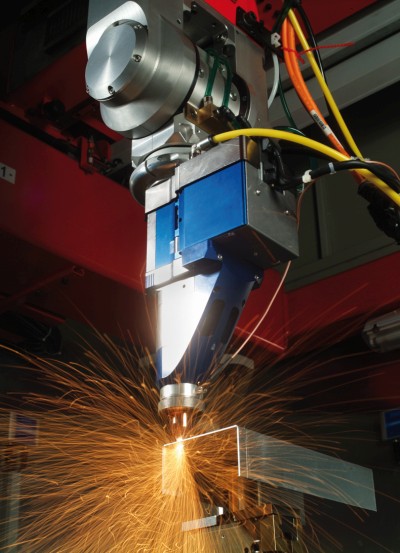
The Power of Laser Processing
Laser processing is a cutting-edge technology that has revolutionized various industries, from manufacturing to healthcare. By harnessing the power of focused laser beams, precise and efficient material processing can be achieved with unparalleled accuracy.
One of the key advantages of laser processing is its versatility. Whether it’s cutting, engraving, welding, or marking, lasers can handle a wide range of materials with ease, including metals, plastics, ceramics, and even organic substances.
Accuracy is another hallmark of laser processing. The high-energy laser beams can be precisely controlled to create intricate patterns or shapes with micron-level precision. This level of accuracy makes laser processing ideal for applications that require fine details and tight tolerances.
Speed is also a major benefit of laser processing. Compared to traditional methods like mechanical cutting or engraving, lasers can complete tasks much faster without compromising quality. This increased efficiency not only saves time but also reduces production costs.
Moreover, laser processing is a non-contact method, meaning there is no physical force applied to the material being processed. This results in minimal wear and tear on equipment and eliminates the need for costly tooling changes or maintenance.
As technology continues to advance, so does the potential of laser processing. With ongoing research and development efforts, new applications and improvements are constantly being discovered, further expanding the capabilities of this remarkable technology.
In conclusion, laser processing offers unparalleled precision, versatility, speed, and efficiency for a wide range of industrial applications. As industries continue to embrace this transformative technology, the possibilities for innovation and advancement are limitless.
Everything You Need to Know About Laser Processing: FAQs Answered
- What is laser processing?
- How does laser processing work?
- What materials can be processed using lasers?
- What are the advantages of laser processing over traditional methods?
- Is laser processing safe for use on sensitive materials?
- What industries commonly use laser processing?
- Can laser processing be used for cutting, engraving, and welding?
- Are there different types of lasers used in laser processing?
What is laser processing?
Laser processing is a cutting-edge technology that utilizes focused laser beams to perform a variety of tasks such as cutting, engraving, welding, and marking on different materials. This advanced technique allows for precise and efficient material processing with unmatched accuracy and speed. By harnessing the power of high-energy laser beams, laser processing offers a non-contact method that minimizes physical force on the materials being processed, resulting in minimal wear and tear on equipment. With its versatility and ability to achieve intricate details with micron-level precision, laser processing has become an essential tool in various industries for achieving superior results in manufacturing, healthcare, research, and beyond.
How does laser processing work?
Laser processing works by harnessing the power of highly focused laser beams to interact with materials in a controlled manner. The process begins with a laser source that emits a concentrated beam of light, which is then directed through optical components to achieve the desired intensity and focus. When the laser beam makes contact with the material, it can heat, melt, vaporize, or even ablate the surface, depending on the parameters set by the operator. This precise interaction allows for cutting, engraving, welding, or marking of various materials with exceptional accuracy and speed. Laser processing is a versatile and efficient technology that continues to drive innovation across industries worldwide.
What materials can be processed using lasers?
Laser processing technology has the remarkable capability to work with a diverse range of materials across various industries. Metals such as steel, aluminum, and titanium are commonly processed using lasers for cutting, welding, and marking applications due to their high thermal conductivity. Additionally, non-metal materials like plastics, ceramics, glass, and even natural materials such as wood and leather can be effectively processed with lasers, thanks to their ability to deliver precise and controlled energy for shaping, engraving, or etching. The versatility of laser processing extends to organic materials like fabrics and paper as well, making it a valuable tool for a wide array of manufacturing and creative endeavors.
What are the advantages of laser processing over traditional methods?
The advantages of laser processing over traditional methods are manifold. Laser processing offers unparalleled precision and accuracy, allowing for intricate patterns and shapes to be created with micron-level detail. Compared to traditional methods, lasers operate at higher speeds, resulting in faster completion of tasks without compromising quality. Additionally, laser processing is a non-contact method, minimizing wear and tear on equipment and eliminating the need for costly tooling changes or maintenance. The versatility of lasers enables them to handle a wide range of materials with ease, making them ideal for various applications across industries. Overall, the efficiency, speed, precision, and versatility of laser processing make it a superior choice over traditional methods in today’s advanced manufacturing landscape.
Is laser processing safe for use on sensitive materials?
When considering laser processing on sensitive materials, safety is a top concern. Laser processing can be safe for use on sensitive materials when proper precautions are taken. It is essential to understand the specific properties of the material being processed and select the appropriate laser parameters to minimize any potential damage. Additionally, using advanced laser systems with features such as precision control and real-time monitoring can help ensure the safety and integrity of sensitive materials during processing. Consulting with experts in laser technology and material science can provide valuable insights and guidance to optimize safety when working with delicate or sensitive materials in laser processing applications.
What industries commonly use laser processing?
Various industries rely on laser processing for its precision and versatility. Some common industries that extensively utilize laser processing include manufacturing, automotive, aerospace, electronics, medical devices, jewelry, and signage. In the manufacturing sector, lasers are used for cutting, welding, and engraving metal and plastic components with high accuracy. The automotive industry utilizes laser processing for welding body panels and cutting airbags. Aerospace companies use lasers for drilling precision holes in aircraft components. In electronics manufacturing, lasers are crucial for cutting circuit boards and marking components. Medical device manufacturers utilize lasers for cutting surgical instruments and fabricating implants. Jewelry makers use lasers for engraving intricate designs on precious metals. Signage companies rely on laser processing for precise cutting and engraving of signs. These industries benefit greatly from the efficiency and quality that laser processing provides.
Can laser processing be used for cutting, engraving, and welding?
Laser processing is a versatile technology that can indeed be used for cutting, engraving, and welding with remarkable precision and efficiency. The focused laser beams are capable of delivering high-energy output to cut through various materials, create intricate designs through engraving, and generate intense heat for welding applications. Whether it’s metals, plastics, ceramics, or even organic substances, laser processing offers a reliable and effective solution for a wide range of industrial needs. The ability to perform multiple tasks with a single technology makes laser processing a preferred choice for many industries seeking high-quality results in their manufacturing processes.
Are there different types of lasers used in laser processing?
Yes, there are different types of lasers used in laser processing, each with its own unique characteristics and applications. Some common types of lasers include CO2 lasers, fiber lasers, and diode lasers. CO2 lasers are well-suited for cutting and engraving non-metal materials like wood, acrylic, and plastics. Fiber lasers are known for their high energy efficiency and are often used for metal cutting and welding applications. Diode lasers, on the other hand, are compact and versatile, making them ideal for tasks such as marking and micro-processing. The choice of laser type depends on the specific requirements of the processing task at hand, including material type, thickness, precision needed, and desired output quality.
No Responses